What is Made in Britain? Q&A with Lindsey Straughton

Made in Britain is a growing community of like-minded manufacturers and designer makers from all around the UK. By applying the Made in Britain marque to your product, packaging or website, your business is making it really clear to buyers and consumers that you’re making right here, in the UK. 

Here, Lindsey Straughton of the National Association of Jewellers explains why this initiative is so beneficial to UK retailers…

Why are the NAJ partnering with Made in Britain? 

The NAJ have teamed up with Made in Britain to give NAJ members the opportunity to use the Made in Britain marque at a preferential rate. We are partnering to help give our maker members a USP.

They can use the additional marketing collateral from MIB and tie in with their large membership who is using the ‘MIB marque’ ie the section of flag with the title.

Additionally Members who sign up to scheme will benefit from publicity on both the NAJ website and the Made in Britain website and the right to use an optional mark on the jewellery itself. Ample point of sale material will also be supplied to members that sign up to the scheme. We in effect will licence members to be able to use the Marque.

What do you get for your licence fee? 

  1. Access to the complete suite of Made in Britain marques and the Brand Handbook, with lots of ideas of how and where you can apply the logo on your marketing materials.
  2. The right to use the Made in Britain optional mark on your made in Britain jewellery.
  3. A dedicated company page in the online Made in Britain Members’ Directory, with all your social media links, photos and videos.
  4. Inclusion in the NAJ Made in Britain online directory 

What is the NAJ and Made in Britain partnership? 

Our members will receive a 25% discount on the MIB 2018 membership fee which will start as low as £150 for a member with a small turnover and will increase incrementally. Send members to their website Made in Britain website http://www.madeingb.org/ 

What is the definition of Made in Britain?

Products fully made in the UK or with the final significant manufacturing process taking part in the UK. We will set the criteria for the UK Jewellers and this is being looked at but may change in rigor dependent on whether the Assay Offices are prepared to mark items with an ADDITIONAL MARK into precious metal. Non precious metal will also be able to be marked eventually.

Lindsey Straughton of the National Association of Jewellers

Will my business have to meet certain criteria?

Yes you have to be accepted. Stage one will be to fill out the MIB application form.  All members will have signed the NAJ code of conduct and will be asked to explain you UK making or manufacturing. It will be primarily self-auditing with members noting who is signing up to this growing community on the website etc. We plan that there can be a spot check or an audit if we perceive any issues. 

Why should I register my interest now if it’s not available until 2018? 

We are asking for registrations now so we can go to the assay office and ask about the possibility of adding an optional mark on precious metal jewellery. We also need retailers to say they think it’s a good idea to stock MIB products and identify them to customers therefore everyone in the industry can comment.

Members can register their interest now by emailing madeinbritain@naj.co.uk  or filling out a form on the Association’s website. 


The Essential SS18 Catwalk Jewellery Report

The month of September heralded the debut of spring/summer 2018 collections from a stream of fashion designers in London, Paris, Milan and New York. And the runways’ romance with statement jewellery was far from over.

Mammoth earrings remained – quite literally – the biggest overall jewellery trend, with oversized, asymmetrical and solo earrings incorporated into nearly every show. Many jewels were with bursting colour, while layering was a strong look on both the neck and wrist, and brooches were phenomenally popular.

Related Blogs: Meet Jewellery Influencer and GEMOLOGUE Founder Liza Urla

Read on for five of the key trends from the SS18 ready-to-wear shows, including the revival of the charm bracelet and the affirmation of the importance of men’s jewellery.

SS18 trend: Lavish lobes

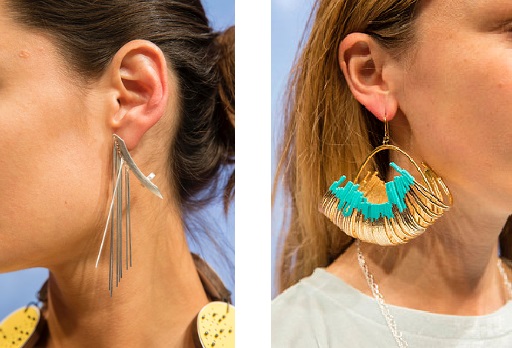
Earrings once again ruled supreme on the catwalks, with a new season offering absolutely no let up in scale, colour, asymmetry and sheer quirk. The points of reference were almost limitless. Chanel opted for enormous transparent drops to match its clear plastic boots and capes; Giorgio Armani played with colourful textiles; Balenciaga created enormous faux gemstones that grazed the collar bone; and Dolce & Gabbana presented a supermarket sweep with pendulous carrots, aubergines, lemons and biscuits (its already over-burdened models carrying grocery bags).

Mismatched earrings worked well to add interest to outfits, while suitably scaled single earrings also succeeded in creating a sense of drama, as elegantly executed at Dries van Noten.

SS18 trend: Don’t forget the boys

There was a real focus on jewels for men in the new-season shows. While the odd flamboyant brooch arose, the overarching theme of the jewels adorning male models was one of classicism and subtly. Plain silver signet rings worn on pinkies, small earrings and simple pendants were seen at Givenchy, Isabel Marant and Paul & Joe (which dressed only its male models in jewellery, while the females were left bare).

Bolder looks ensued at the punky show delivered by Andreas Kronthaler for Vivienne Westwood, where men wore layered necklaces and statement earrings with slicks of lipstick, and at Missoni, where long brightly hued necklaces created pops of colour.

SS18 trend: Fit for a princess

Elaborate antique-style suites of gem-heavy jewellery drummed up drama at many shows, including a tiara or two – Dolce & Gabbana is a brilliant example. Classic pearls appeared across a diverse collection of shows and proved to be entirely versatile: Sonia Rykiel used them to enforce a nautical theme with baroque pearls; Valentino used studded pearls to create a futuristic look; and Alexander McQueen managed to incorporate them into punky-goth stacks of chokers that were strapped over models’ greasy locks.

Related Blogs: How To Boost Your Brand With Influencer Marketing and Bloggers

Maintaining the regal theme, brooches were pinned to male and female suit lapels, coats, knitwear, scarves, bags and top buttons at shows including Louis Vuitton and Dries Van Noten (which went into a particular brooch – and enormous earring –  overload).

SS18 trend: Neckline layering

Chokers – the breakthrough jewellery-fashion item of the past few seasons – remained prominent on the catwalks, but it has evolved to become a component of a stack rather than a solo statement jewel (though Thom Browne’s clock chokers certainly stood out). This allowed designers like Versace, Christian Dior and Saint Laurent to mix them with longer delicate chains, lariats and pendants to create a relaxed boho look that is ripe for balmy spring/summer days.

Related Blogs: Award Winning Designer Brands Take Centre Stage at IJL 2017

Gucci opted for a more maximalist style of layering with heavy chokers, rainbow-hued GG logos and bright beads, while Emporio Armani stacked up pastel-coloured acrylic link chains (plastic-fantastic jewels were a popular choice throughout the Weeks – see Oscar de la Renta’s chunky bangles). Delicate chains and fringing were also popular motifs outside of necklaces, with tassels of chain swinging from cocktail rings, ear studs and collar clips.

SS18 trend: Charm offensive 

Could we be about to see a return of the charm? On the catwalks, it’s already happening. The classic jewellery icon appeared in a number of guises, from fun-loving charm bracelets and matching necklaces at Miu Miu, to geometric charms hanging from blue leather cuffs at Elie Saab and sweet, pastel-hued gemstone charms on necklaces at Chloe.

Marni also presented a loud selection of jewellery that included charm-laden necklaces. Popular motifs included miniature Eiffel Towers, keys, flowers, hearts and fruit, with the spirit of these charm jewels one of twee and nostalgia rather than personalisation or collectability.

IJL is #withyou offering trends advice specifically targeted to the jewellery industry. Discover more essential advice on the IJL Insider Blog. 

Palladium Price Rise Over Platinum Challenges Jewellery Marketers

A surge in palladium prices to exceed platinum, poses a marketing challenge for jewellery in both precious metals. Palladium prices equalled platinum on September 27 for the first time in 16 years, and palladium prices were higher than platinum this week. Gold has a premium over both metals. On October 11, 2017, platinum was up 0.2 percent at USD$930.50 an ounce, while palladium was up 0.3 percent at USD$936.25 an ounce.

The new price dynamics make it harder to promote platinum as the premier jewellery metal, with Platinum Guild having shrunk its marketing drive in Europe in recent years. However, it is becoming relatively cheap for jewellers to restock platinum compared with gold. Designer-makers say platinum is a superior metal in qualitative terms to palladium, a lustrous silvery-white rare metal used in a diverse range of applications.

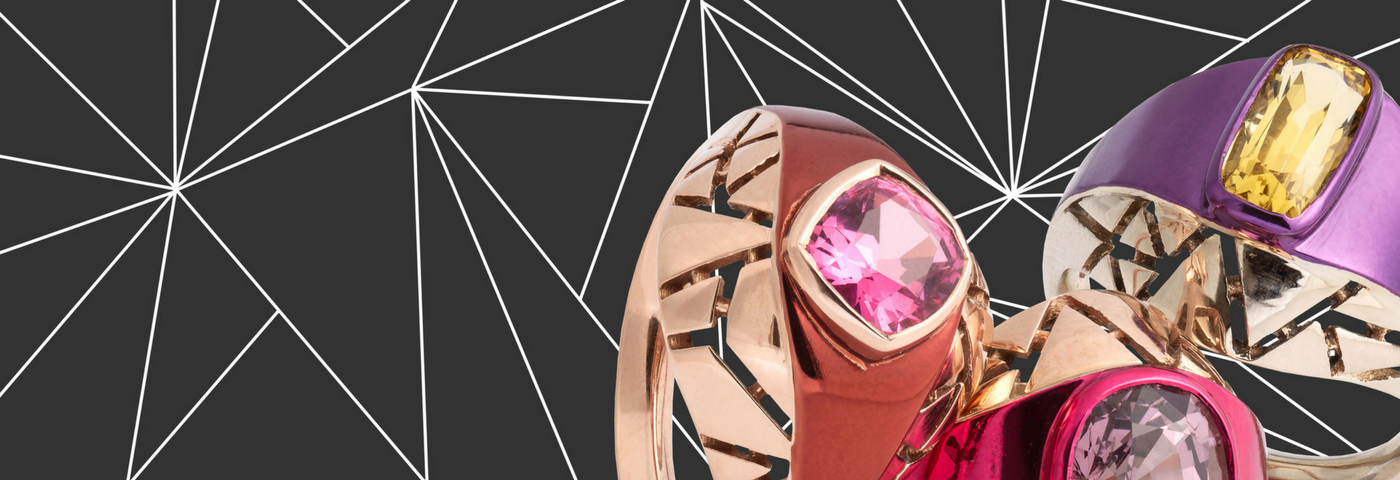
Diamond Ring by Eckart Schillings

Palladium was the best-performing precious metal last year, rising 20 percent in price for its biggest annual gain in six years. Platinum ended 2016 only 1 percent higher. Palladium has rallied due to a widely held perception that the metal is in a global deficit amid speculation that production won’t be enough to meet demand. Palladium’s surge has been driven by strong industrial demand for its application in catalytic converters that clean exhaust fumes – chiefly of petrol-powered vehicles. The main use of palladium is in industry, while jewellery accounts for a modest share of total demand for the metal.

Platinum has the opposite story, as demand by industry, notably in catalytic converters for diesel cars, is struggling as diesel falls out of fashion as a vehicle fuel. Again platinum’s application in jewellery is a modest segment of its use, which is mainly industrial. The prices of both palladium and platinum are driven far more by industry requirements and investor demand, than by consumption in jewellery. This has led to a scenario where palladium and platinum prices are now roughly level pegging.

Investors say the relative price outlook for both metals will likely be a bumpy road as palladium faces resistance as it nudges above platinum. Any sustained surge in the price of palladium above platinum would create a whole new set of challenges to platinum marketers already struggling to get across a message that platinum is the No. 1 jewellery metal.

While platinum has been seen as the metal of choice for engagement rings, palladium is perhaps best known for its use in men’s wedding bands. Palladium is popular in wedding bands for men because it is lighter and was for many years more affordable than platinum, and it has the advantage over costlier white gold of not requiring any coating. Luxury jewellers such as Stephen Webster and Vivienne Westwood have included palladium pieces in their collections. Jewellers believe it is going to be hard to see sustained demand for palladium wedding bands if the price remains around the platinum mark.

Simon Johnson, Chairman of the National Association of Jewellers (NAJ), has said platinum is still generally seen by the public as the premium choice, in terms of weight, purity and rarity. If the palladium price remains where it is, there is a danger that public demand for palladium will start to drop off, he has said. Palladium has struggled with a consistent preference for gold and platinum in jewellery in much of the world. Many jewellery consumers simply have not heard of palladium due to a lack of high-profile marketing campaigns, so it will be an uphill task for jewellers to persuade them to spend even more on a metal that they are not familiar with.

However, palladium is far from knocked out as a jewellery metal. It requires a highly creative approach from marketers, who need to sell its emotional value at a time of high prices.

7 Steps to Designing a Social Media Campaign as a Jewellery Business

Did you know that 90% of marketers say that social media is an important part of their business?

Social media is an amazing way to connect with your target audience and share content about your business and the wider jewellery industry.

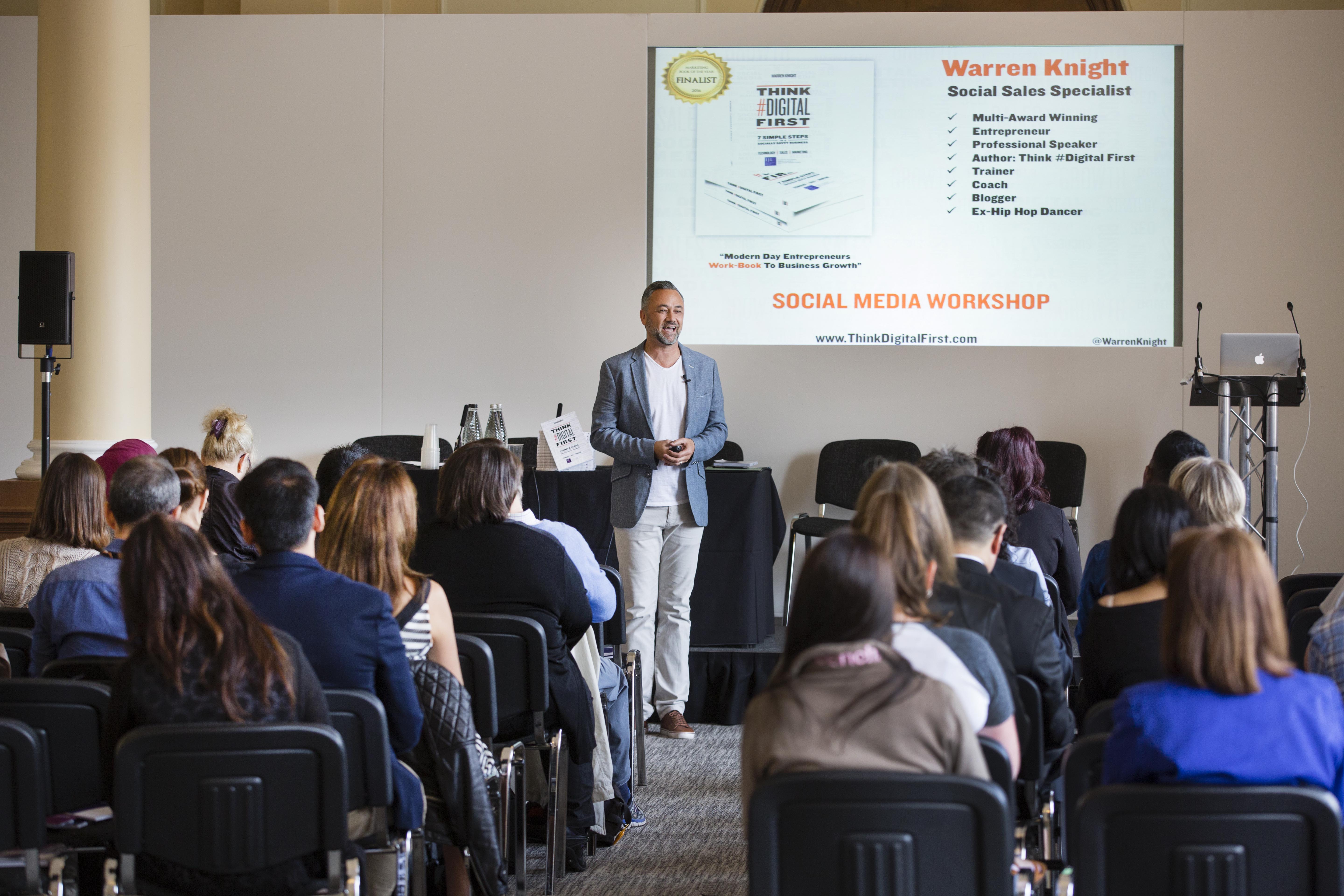
I have found that, over the last few years speaking at every single International Jewellery London event, that jewellery business owners really struggle with their social media because they do not have a campaign in place, or understand what is needed to create one.

To help you further, I want to share with you seven simple steps to designing a social media campaign as a jewellery business, as well as further share with you a webinar I will be running on this topic on the 17th October.

STEP ONE: Define your target customer

The first step to building a great social media campaign in the jewellery industry is understanding your target customer, and defining this.

There are, of course, characteristics that will help you define your target customer such as age, gender, and demographics, but I want you to think much deeper, and how you can offer an experience they will fall in love with.

READ MORE: Top Advice by Warren Knight on the IJL Insider Blog 

Put yourself in your target customers’ shoes. What is their first thought when researching a jewellery product? How do they progress from there? Most importantly, what’s the final question they ask before making a purchase? To better understand this exercise, let’s analyse two hypothetical target customers: Rita and John.

Rita: Creative entrepreneur who is very visual, passionate and inquisitive. Always asking questions before purchasing and will likely find the answers to her questions via an infographic on Pinterest, or an Instagram post.

John: Analytical and methodical with an interest in facts and figures. He prefers using LinkedIn to get the answers to his questions.

STEP TWO: Define your brand’s value proposition

A value proposition is a definition around what you are promising to deliver to your customers. This will explain how your jewellery products/services will solve your target customers’ needs, the benefits around your product and exactly what makes you different from your competitor (unique selling proposition).

When creating a successful social media campaign, having your value proposition will help you build a campaign with goals and objectives that can be met by you and your team, but also be successfully measured.

STEP THREE: Find the right social networks for your business

You might think that just because this article is about designing a social media campaign that you need to be using every social network.

To really benefit from any social media campaign you want to run, it needs to be done using the social networks you are most engaging on, and the ones that your target customers will be using as a way to engage with brands online.

Related Blogs: 5 of the Best Royalty Free Image Websites

Really understand the demographics around each of the main social networks and only use the ones that are relevant, and that you feel comfortable using. It’s all about mastering one social network, and moving on to the rest rather than spreading yourself too thin.

STEP FOUR: Creating content your audience will love

The content you create online needs to be specific, relevant, unique and not all about ‘you’ as a jewellery business. Every jewellery business is looking to create content that is either the ‘next best thing’ or ‘viral’. This isn’t entirely realistic and is the wrong approach to content creation. 16% of B2B marketers publish new content daily, and a further 26% publish new content multiple times a week. This can be draining (I know first hand, as I share unique content twice a week via my blog) and sometimes… ideas are few and far between.

It takes a lot of time and effort to come up with content that engages with an audience but it’s just as important to feel confident in your content otherwise the effectiveness of what you share, will decrease as your audience will know you’re not supporting your own work.

Here are four ways you can find out what your audience wants to see from you for your social media campaign…

  1. Create a questionnaire

This is something I do with my audience when I need their feedback and it allows you to get true and honest answers. Make sure you know what you want to achieve with your questionnaire and position the questions to reflect this.

  1. Talk To Friends, Colleagues & Family

One of the best ways to get the creative juices flowing is to speak to the people closest to you.

  1. Speak To Your Target Audience

Now you know WHO your target audience is and WHERE they hang out, get engaged in a two-way conversation and FIND OUT the kind of content they want to read/watch through running a Twitter Poll, or asking for feedback.

As soon as you have found out the type of content your audience wants from you, use a tool called Feedly to research your industry, and bring together hundreds of great pieces of content that you can share, and get inspiration from when it comes to creating your own content.

STEP FIVE: Designing images and videos for your social media campaign

What type of images and videos are you creating to encourage engagement within your community?

It’s true that when people hear information, they are likely to only remember around 10% of this 72 hours later. If an image is paired with this information, people retain 65% more information in the same amount of time. Are you doing everything you can to make sure your audience are remembering your business?

I would suggest using a variation of video’s, infographics, slideshows and basic visuals. All of these can be created using a great free tool called canva.

STEP SIX: Understanding the best ways to engage with your audience 

Social media is more than just pushing out your own content. For people to see you as a thought leader in the jewellery and someone who can be trusted, you need to engage in a two way conversation.

What are you doing online that increases engagement with your audience?

Having a two-way conversation online and encouraging engagement will build trust. The more open you are, and the more you use Social Media as a customer service outlet, the most likely your audience will feel safe, and be one step closer to purchasing from your jewellery business.

It takes eight times for a potential customer to ‘touch’ your business before they buy. With this in mind, what are you doing to shorten this process? That’s why social media is SO important because it shortens the buying process, and turns a potential customer into a paying customer that much quicker.

STEP SEVEN: Put your campaign into action

And now, it’s time to put your campaign into action. To really understand how best to do this and save time through automation, I have a very special webinar I would love for you to attend.

How You’ll Benefit

  • Learn my winning formula to creating a Social Media campaign that works
  • Understand why being “niche” market focused wins business
  • Defining your brand value proposition
  • Learn what makes the perfect landing page copy
  • What 67% of your potential customer are thinking about
  • How ONE action can increase lead generation by 200%
  • Define your tone of voice
  • Create engaging visuals for your campaign
  • How to automate your campaign content
  • Set goals, objectives and measure success

The webinar will take place on the 17th October, at 7pm and you can secure your place here.

What is Made in Britain? Q&A with Lindsey Straughton

Made in Britain is a growing community of like-minded manufacturers and designer makers from all around the UK. By applying the Made in Britain marque to your product, packaging or website, your business is making it really clear to buyers and consumers that you’re making right here, in the UK. 

Here, Lindsey Straughton of the National Association of Jewellers explains why this initiative is so beneficial to UK retailers…

Why are the NAJ partnering with Made in Britain? 

The NAJ have teamed up with Made in Britain to give NAJ members the opportunity to use the Made in Britain marque at a preferential rate. We are partnering to help give our maker members a USP.

They can use the additional marketing collateral from MIB and tie in with their large membership who is using the ‘MIB marque’ ie the section of flag with the title.

Additionally Members who sign up to scheme will benefit from publicity on both the NAJ website and the Made in Britain website and the right to use an optional mark on the jewellery itself. Ample point of sale material will also be supplied to members that sign up to the scheme. We in effect will licence members to be able to use the Marque.

What do you get for your licence fee? 

  1. Access to the complete suite of Made in Britain marques and the Brand Handbook, with lots of ideas of how and where you can apply the logo on your marketing materials.
  2. The right to use the Made in Britain optional mark on your made in Britain jewellery.
  3. A dedicated company page in the online Made in Britain Members’ Directory, with all your social media links, photos and videos.
  4. Inclusion in the NAJ Made in Britain online directory 

What is the NAJ and Made in Britain partnership? 

Our members will receive a 25% discount on the MIB 2018 membership fee which will start as low as £150 for a member with a small turnover and will increase incrementally. Send members to their website Made in Britain website http://www.madeingb.org/ 

What is the definition of Made in Britain?

Products fully made in the UK or with the final significant manufacturing process taking part in the UK. We will set the criteria for the UK Jewellers and this is being looked at but may change in rigor dependent on whether the Assay Offices are prepared to mark items with an ADDITIONAL MARK into precious metal. Non precious metal will also be able to be marked eventually.

Lindsey Straughton of the National Association of Jewellers

Will my business have to meet certain criteria?

Yes you have to be accepted. Stage one will be to fill out the MIB application form.  All members will have signed the NAJ code of conduct and will be asked to explain you UK making or manufacturing. It will be primarily self-auditing with members noting who is signing up to this growing community on the website etc. We plan that there can be a spot check or an audit if we perceive any issues. 

Why should I register my interest now if it’s not available until 2018? 

We are asking for registrations now so we can go to the assay office and ask about the possibility of adding an optional mark on precious metal jewellery. We also need retailers to say they think it’s a good idea to stock MIB products and identify them to customers therefore everyone in the industry can comment.

Members can register their interest now by emailing madeinbritain@naj.co.uk  or filling out a form on the Association’s website. 


The Essential SS18 Catwalk Jewellery Report

The month of September heralded the debut of spring/summer 2018 collections from a stream of fashion designers in London, Paris, Milan and New York. And the runways’ romance with statement jewellery was far from over.

Mammoth earrings remained – quite literally – the biggest overall jewellery trend, with oversized, asymmetrical and solo earrings incorporated into nearly every show. Many jewels were with bursting colour, while layering was a strong look on both the neck and wrist, and brooches were phenomenally popular.

Related Blogs: Meet Jewellery Influencer and GEMOLOGUE Founder Liza Urla

Read on for five of the key trends from the SS18 ready-to-wear shows, including the revival of the charm bracelet and the affirmation of the importance of men’s jewellery.

SS18 trend: Lavish lobes

Earrings once again ruled supreme on the catwalks, with a new season offering absolutely no let up in scale, colour, asymmetry and sheer quirk. The points of reference were almost limitless. Chanel opted for enormous transparent drops to match its clear plastic boots and capes; Giorgio Armani played with colourful textiles; Balenciaga created enormous faux gemstones that grazed the collar bone; and Dolce & Gabbana presented a supermarket sweep with pendulous carrots, aubergines, lemons and biscuits (its already over-burdened models carrying grocery bags).

Mismatched earrings worked well to add interest to outfits, while suitably scaled single earrings also succeeded in creating a sense of drama, as elegantly executed at Dries van Noten.

SS18 trend: Don’t forget the boys

There was a real focus on jewels for men in the new-season shows. While the odd flamboyant brooch arose, the overarching theme of the jewels adorning male models was one of classicism and subtly. Plain silver signet rings worn on pinkies, small earrings and simple pendants were seen at Givenchy, Isabel Marant and Paul & Joe (which dressed only its male models in jewellery, while the females were left bare).

Bolder looks ensued at the punky show delivered by Andreas Kronthaler for Vivienne Westwood, where men wore layered necklaces and statement earrings with slicks of lipstick, and at Missoni, where long brightly hued necklaces created pops of colour.

SS18 trend: Fit for a princess

Elaborate antique-style suites of gem-heavy jewellery drummed up drama at many shows, including a tiara or two – Dolce & Gabbana is a brilliant example. Classic pearls appeared across a diverse collection of shows and proved to be entirely versatile: Sonia Rykiel used them to enforce a nautical theme with baroque pearls; Valentino used studded pearls to create a futuristic look; and Alexander McQueen managed to incorporate them into punky-goth stacks of chokers that were strapped over models’ greasy locks.

Related Blogs: How To Boost Your Brand With Influencer Marketing and Bloggers

Maintaining the regal theme, brooches were pinned to male and female suit lapels, coats, knitwear, scarves, bags and top buttons at shows including Louis Vuitton and Dries Van Noten (which went into a particular brooch – and enormous earring –  overload).

SS18 trend: Neckline layering

Chokers – the breakthrough jewellery-fashion item of the past few seasons – remained prominent on the catwalks, but it has evolved to become a component of a stack rather than a solo statement jewel (though Thom Browne’s clock chokers certainly stood out). This allowed designers like Versace, Christian Dior and Saint Laurent to mix them with longer delicate chains, lariats and pendants to create a relaxed boho look that is ripe for balmy spring/summer days.

Related Blogs: Award Winning Designer Brands Take Centre Stage at IJL 2017

Gucci opted for a more maximalist style of layering with heavy chokers, rainbow-hued GG logos and bright beads, while Emporio Armani stacked up pastel-coloured acrylic link chains (plastic-fantastic jewels were a popular choice throughout the Weeks – see Oscar de la Renta’s chunky bangles). Delicate chains and fringing were also popular motifs outside of necklaces, with tassels of chain swinging from cocktail rings, ear studs and collar clips.

SS18 trend: Charm offensive 

Could we be about to see a return of the charm? On the catwalks, it’s already happening. The classic jewellery icon appeared in a number of guises, from fun-loving charm bracelets and matching necklaces at Miu Miu, to geometric charms hanging from blue leather cuffs at Elie Saab and sweet, pastel-hued gemstone charms on necklaces at Chloe.

Marni also presented a loud selection of jewellery that included charm-laden necklaces. Popular motifs included miniature Eiffel Towers, keys, flowers, hearts and fruit, with the spirit of these charm jewels one of twee and nostalgia rather than personalisation or collectability.

IJL is #withyou offering trends advice specifically targeted to the jewellery industry. Discover more essential advice on the IJL Insider Blog. 

Palladium Price Rise Over Platinum Challenges Jewellery Marketers

A surge in palladium prices to exceed platinum, poses a marketing challenge for jewellery in both precious metals. Palladium prices equalled platinum on September 27 for the first time in 16 years, and palladium prices were higher than platinum this week. Gold has a premium over both metals. On October 11, 2017, platinum was up 0.2 percent at USD$930.50 an ounce, while palladium was up 0.3 percent at USD$936.25 an ounce.

The new price dynamics make it harder to promote platinum as the premier jewellery metal, with Platinum Guild having shrunk its marketing drive in Europe in recent years. However, it is becoming relatively cheap for jewellers to restock platinum compared with gold. Designer-makers say platinum is a superior metal in qualitative terms to palladium, a lustrous silvery-white rare metal used in a diverse range of applications.

Diamond Ring by Eckart Schillings

Palladium was the best-performing precious metal last year, rising 20 percent in price for its biggest annual gain in six years. Platinum ended 2016 only 1 percent higher. Palladium has rallied due to a widely held perception that the metal is in a global deficit amid speculation that production won’t be enough to meet demand. Palladium’s surge has been driven by strong industrial demand for its application in catalytic converters that clean exhaust fumes – chiefly of petrol-powered vehicles. The main use of palladium is in industry, while jewellery accounts for a modest share of total demand for the metal.

Platinum has the opposite story, as demand by industry, notably in catalytic converters for diesel cars, is struggling as diesel falls out of fashion as a vehicle fuel. Again platinum’s application in jewellery is a modest segment of its use, which is mainly industrial. The prices of both palladium and platinum are driven far more by industry requirements and investor demand, than by consumption in jewellery. This has led to a scenario where palladium and platinum prices are now roughly level pegging.

Investors say the relative price outlook for both metals will likely be a bumpy road as palladium faces resistance as it nudges above platinum. Any sustained surge in the price of palladium above platinum would create a whole new set of challenges to platinum marketers already struggling to get across a message that platinum is the No. 1 jewellery metal.

While platinum has been seen as the metal of choice for engagement rings, palladium is perhaps best known for its use in men’s wedding bands. Palladium is popular in wedding bands for men because it is lighter and was for many years more affordable than platinum, and it has the advantage over costlier white gold of not requiring any coating. Luxury jewellers such as Stephen Webster and Vivienne Westwood have included palladium pieces in their collections. Jewellers believe it is going to be hard to see sustained demand for palladium wedding bands if the price remains around the platinum mark.

Simon Johnson, Chairman of the National Association of Jewellers (NAJ), has said platinum is still generally seen by the public as the premium choice, in terms of weight, purity and rarity. If the palladium price remains where it is, there is a danger that public demand for palladium will start to drop off, he has said. Palladium has struggled with a consistent preference for gold and platinum in jewellery in much of the world. Many jewellery consumers simply have not heard of palladium due to a lack of high-profile marketing campaigns, so it will be an uphill task for jewellers to persuade them to spend even more on a metal that they are not familiar with.

However, palladium is far from knocked out as a jewellery metal. It requires a highly creative approach from marketers, who need to sell its emotional value at a time of high prices.

7 Steps to Designing a Social Media Campaign as a Jewellery Business

Did you know that 90% of marketers say that social media is an important part of their business?

Social media is an amazing way to connect with your target audience and share content about your business and the wider jewellery industry.

I have found that, over the last few years speaking at every single International Jewellery London event, that jewellery business owners really struggle with their social media because they do not have a campaign in place, or understand what is needed to create one.

To help you further, I want to share with you seven simple steps to designing a social media campaign as a jewellery business, as well as further share with you a webinar I will be running on this topic on the 17th October.

STEP ONE: Define your target customer

The first step to building a great social media campaign in the jewellery industry is understanding your target customer, and defining this.

There are, of course, characteristics that will help you define your target customer such as age, gender, and demographics, but I want you to think much deeper, and how you can offer an experience they will fall in love with.

READ MORE: Top Advice by Warren Knight on the IJL Insider Blog 

Put yourself in your target customers’ shoes. What is their first thought when researching a jewellery product? How do they progress from there? Most importantly, what’s the final question they ask before making a purchase? To better understand this exercise, let’s analyse two hypothetical target customers: Rita and John.

Rita: Creative entrepreneur who is very visual, passionate and inquisitive. Always asking questions before purchasing and will likely find the answers to her questions via an infographic on Pinterest, or an Instagram post.

John: Analytical and methodical with an interest in facts and figures. He prefers using LinkedIn to get the answers to his questions.

STEP TWO: Define your brand’s value proposition

A value proposition is a definition around what you are promising to deliver to your customers. This will explain how your jewellery products/services will solve your target customers’ needs, the benefits around your product and exactly what makes you different from your competitor (unique selling proposition).

When creating a successful social media campaign, having your value proposition will help you build a campaign with goals and objectives that can be met by you and your team, but also be successfully measured.

STEP THREE: Find the right social networks for your business

You might think that just because this article is about designing a social media campaign that you need to be using every social network.

To really benefit from any social media campaign you want to run, it needs to be done using the social networks you are most engaging on, and the ones that your target customers will be using as a way to engage with brands online.

Related Blogs: 5 of the Best Royalty Free Image Websites

Really understand the demographics around each of the main social networks and only use the ones that are relevant, and that you feel comfortable using. It’s all about mastering one social network, and moving on to the rest rather than spreading yourself too thin.

STEP FOUR: Creating content your audience will love

The content you create online needs to be specific, relevant, unique and not all about ‘you’ as a jewellery business. Every jewellery business is looking to create content that is either the ‘next best thing’ or ‘viral’. This isn’t entirely realistic and is the wrong approach to content creation. 16% of B2B marketers publish new content daily, and a further 26% publish new content multiple times a week. This can be draining (I know first hand, as I share unique content twice a week via my blog) and sometimes… ideas are few and far between.

It takes a lot of time and effort to come up with content that engages with an audience but it’s just as important to feel confident in your content otherwise the effectiveness of what you share, will decrease as your audience will know you’re not supporting your own work.

Here are four ways you can find out what your audience wants to see from you for your social media campaign…

  1. Create a questionnaire

This is something I do with my audience when I need their feedback and it allows you to get true and honest answers. Make sure you know what you want to achieve with your questionnaire and position the questions to reflect this.

  1. Talk To Friends, Colleagues & Family

One of the best ways to get the creative juices flowing is to speak to the people closest to you.

  1. Speak To Your Target Audience

Now you know WHO your target audience is and WHERE they hang out, get engaged in a two-way conversation and FIND OUT the kind of content they want to read/watch through running a Twitter Poll, or asking for feedback.

As soon as you have found out the type of content your audience wants from you, use a tool called Feedly to research your industry, and bring together hundreds of great pieces of content that you can share, and get inspiration from when it comes to creating your own content.

STEP FIVE: Designing images and videos for your social media campaign

What type of images and videos are you creating to encourage engagement within your community?

It’s true that when people hear information, they are likely to only remember around 10% of this 72 hours later. If an image is paired with this information, people retain 65% more information in the same amount of time. Are you doing everything you can to make sure your audience are remembering your business?

I would suggest using a variation of video’s, infographics, slideshows and basic visuals. All of these can be created using a great free tool called canva.

STEP SIX: Understanding the best ways to engage with your audience 

Social media is more than just pushing out your own content. For people to see you as a thought leader in the jewellery and someone who can be trusted, you need to engage in a two way conversation.

What are you doing online that increases engagement with your audience?

Having a two-way conversation online and encouraging engagement will build trust. The more open you are, and the more you use Social Media as a customer service outlet, the most likely your audience will feel safe, and be one step closer to purchasing from your jewellery business.

It takes eight times for a potential customer to ‘touch’ your business before they buy. With this in mind, what are you doing to shorten this process? That’s why social media is SO important because it shortens the buying process, and turns a potential customer into a paying customer that much quicker.

STEP SEVEN: Put your campaign into action

And now, it’s time to put your campaign into action. To really understand how best to do this and save time through automation, I have a very special webinar I would love for you to attend.

How You’ll Benefit

  • Learn my winning formula to creating a Social Media campaign that works
  • Understand why being “niche” market focused wins business
  • Defining your brand value proposition
  • Learn what makes the perfect landing page copy
  • What 67% of your potential customer are thinking about
  • How ONE action can increase lead generation by 200%
  • Define your tone of voice
  • Create engaging visuals for your campaign
  • How to automate your campaign content
  • Set goals, objectives and measure success

The webinar will take place on the 17th October, at 7pm and you can secure your place here.