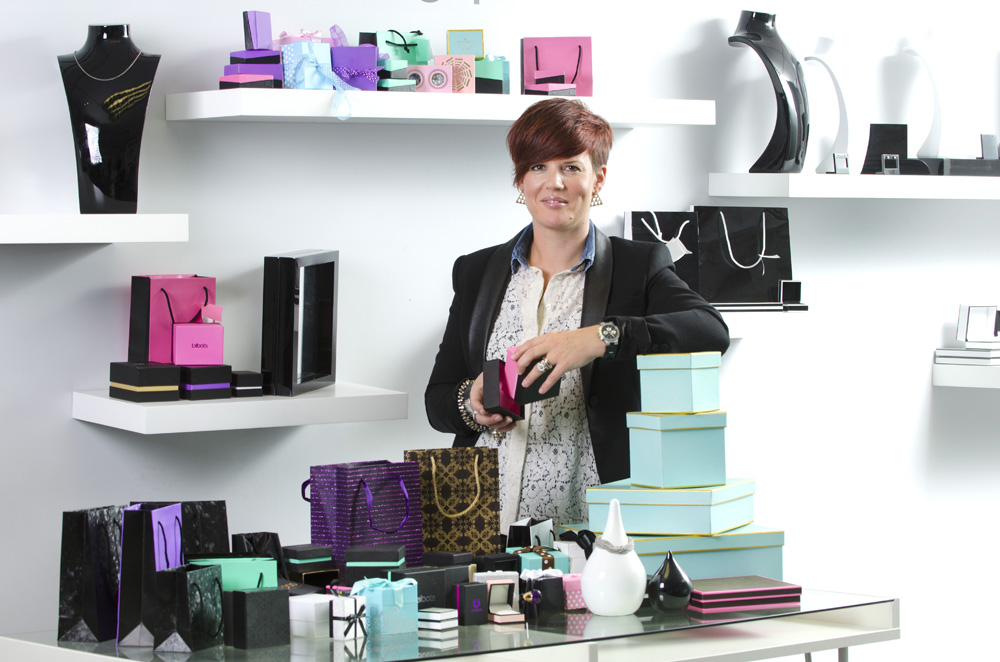
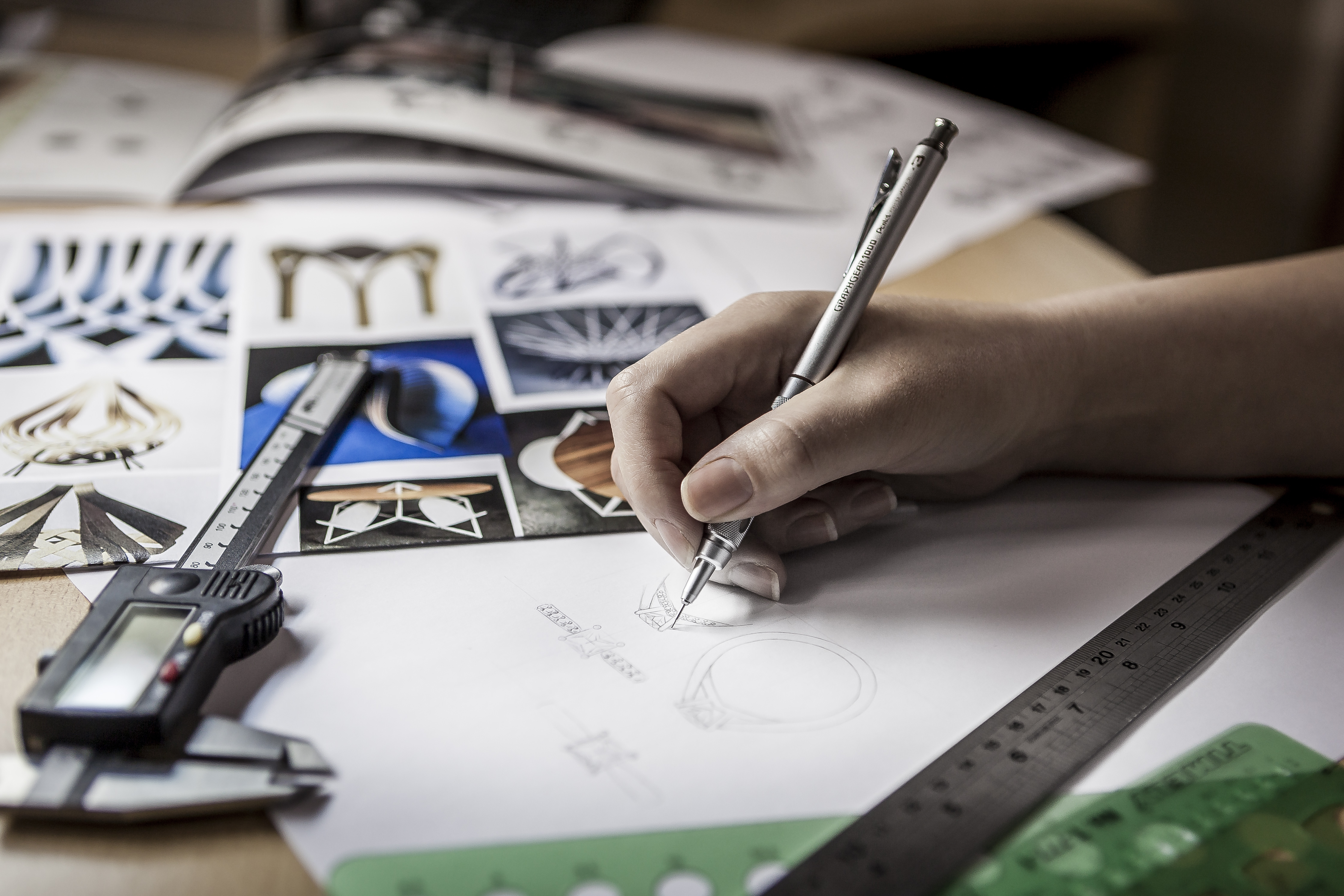
Meet the designer: Siobhan Maher, Domino Jewellery

Meet the designer: Siobhan Maher, Domino Jewellery

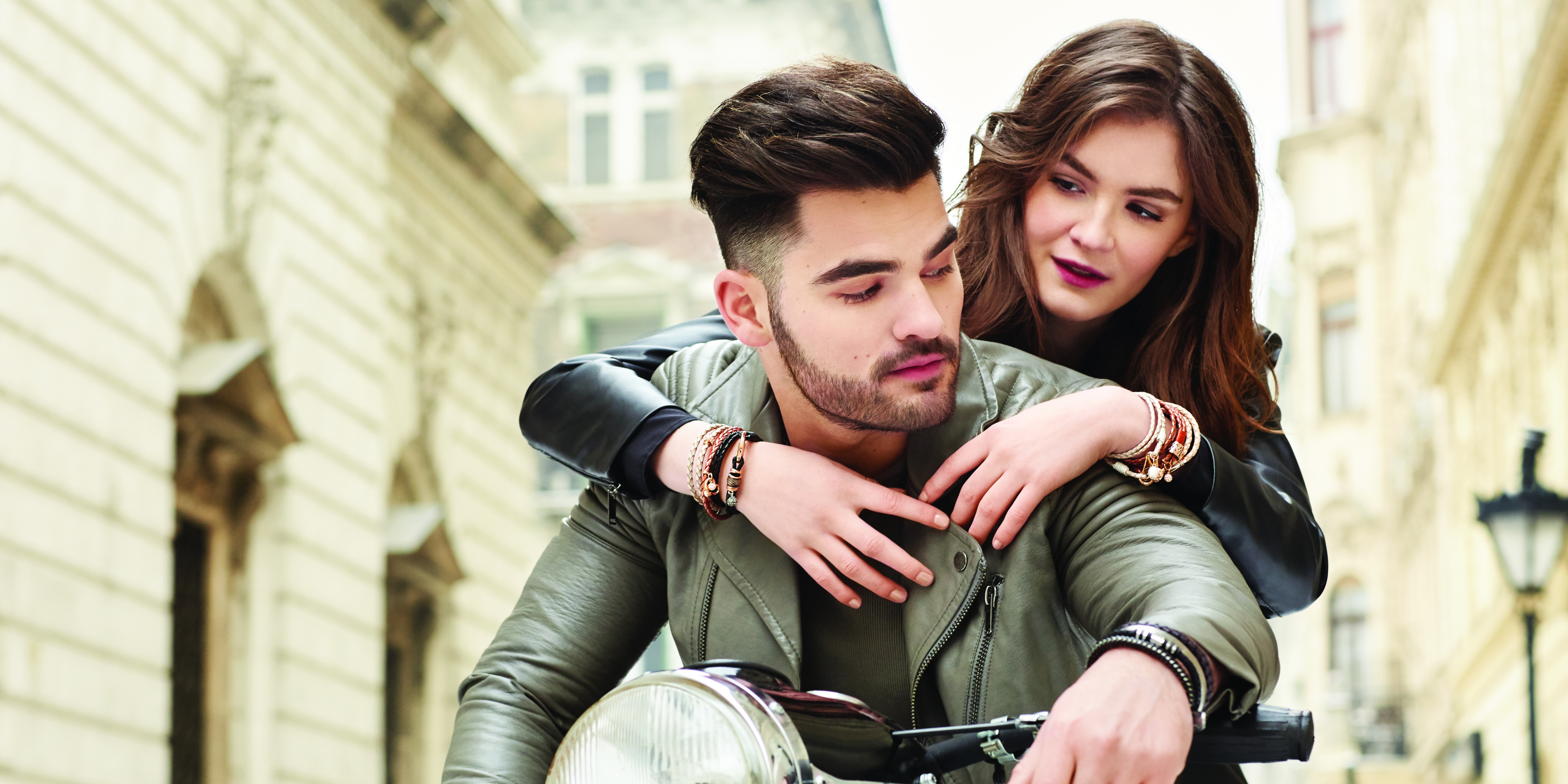
Premium IJL exhibitor Domino Jewellery continues to impress retailers with its forward-thinking, commercial and boundary pushing fine jewellery designs. The company presents its new collections annually at International Jewellery London and this year will be no exception. Here, Domino Jewellery senior ... Read More
Meet the designer: Siobhan Maher, Domino Jewellery

Meet the designer: Siobhan Maher, Domino Jewellery

Premium IJL exhibitor Domino Jewellery continues to impress retailers with its forward-thinking, commercial and boundary pushing fine jewellery designs. The company presents its new collections annually at International Jewellery London and this year will be no exception. Here, Domino Jewellery senior ... Read More

Essential Advice to Improve Your Digital Customer Experience

The power of customer experience is well-known among jewellery retailers.

A glass of champagne during the bridal buying process, or a friendly smile, can make a big difference when a customer is getting ready to hand over their credit card.

But what about your website? Just as customer service matters in-person, it also makes a big difference online. If a customer visits your website and finds it difficult to use, riddled with errors or filled with broken links, how will this reflect on your bricks-and-mortar stores?

Here, we explain what digital customer experience really means and why it is so important.

What is ‘digital customer experience’?

A digital customer experience is anything on your digital channels and social media that a customer comes into contact with, whether they’re just browsing for a gift or looking for support. In 2017, the lines between online and bricks-and-mortar retailing are blurred, which means how your brand performs online could change the way a person feels about your high street boutique.

Read more: What Do Customers Look for in Luxury Brands in 2017?

Digital customers don’t just land on your website looking to shop. Some may be ‘webrooming’ or looking to browse your offer and discover the best prices ahead of a weekend shopping trip. Others may be ‘showrooming’, having visited a high street store to touch and feel products and now jumping online to find the best deal.

Digital experiences are driven by the needs of each individual who visits your website. This is why a personalised approach is such an important thing to consider when designing your digital experience.

Read more: Why the Synthetic Diamond Market Hinges on Clever Promotion

Does your website meet the needs of someone trying to find a last minute gift and a returning, loyal customer? Does it provide inspiration for those who haven’t made up their minds yet? This is why gathering feedback and tracking your users as they move across your site is so important.

What constitutes a great customer experience online?

According to Crispin Boon, head research officer at technology and advisory insight firm, Maru/edr, there are four key facets to a great customer experience online. He explains: “In 2016, we analysed over 1.2 million responses to online retail surveys to uncover what the true drivers of digital experience satisfaction were – we discovered that ease, service, product and fulfilment are the four fundamentals of a fantastic digital customer experience. For example, shoppers will wait no longer than three seconds on average for a site to load – so important to keep up with demands.”

Is it possible to translate in-store customer experience to an online setting?

Although this may seem like a challenge, there are ways to translate all of your hard-earned customer service experience onto your website. While your stores benefit from well-trained staff, does your website encourage customers to fend for themselves? Change this by introducing a live chat tool, which allows your online customers to ask questions and experience the same friendly-approach that you promote in-store.

Another way to showcase your customer service online is through features like customer reviews, star-rating systems, beautiful product imagery and well-written, detailed content. The better these elements are, the more a site visitor can ‘self-serve’, without having to ring you out of frustration or confusion.

How can you measure, monitor and act on customer feedback?

Knowing what your customers are thinking is essential if you want to improve online. There are some great ways to capture feedback online, including site surveys that pop up after a purchase or during the browsing process, or integrated feedback buttons. Each method is worth exploring if you want to work out what makes your customers tick.

Feedback may seem overwhelming, especially if it is spread across operational issues, design, imagery and customer journey mapping. Instead of ignoring feedback, act on it and show your customers that you take their online needs into account, just as you do when you’re stood across from them in store. A good place to start is broken links, poor quality images, social media buttons that fail to loads, and easy access to a telephone number and other contact information.

Read more: How Sponsored Posts and Advertising Works on Instagram

Should every company have a digital customer experience manager?

Not necessarily, but it is important to get your wider team discussing the digital customer experience. Ask your staff to spend an hour in the shoes of a digital customer using your website – is it easy to navigate, are delivery options explained clearly, is a product description accurate? After all, the digital customer experience isn’t just the responsibility of your web developer.

The digital customer experience checklist

Is your website up to speed? Consider these top five places to start if you are ready for a website overhaul…

  1. Quick loading: Does your website take more than three seconds to load? Customers are proven to choose another site if the one they’re trying to access is slow.
  2. Mobile friendly: Does your website automatically format to a mobile and tablet size depending on the device your customer is using?
  3. Easy navigation: You want customers to find what they’re looking for quickly. If your menu bar is complicated, full of criss-crossing options or filled with broken links, you’re unlikely to impress.
  4. Contact details: Does your website clearly show a customer how they can get in touch with you? A phone number, email address and social media channels, clearly displayed, will ensure there’s no frustration.
  5. Quality imagery: Pixelated images are guaranteed to turn your audience off, especially on your homepage. Make the best possible first impression with engaging, interesting images.

IJL is #withyou offering accessible and practical advice from across the worlds of digital, social media, marketing and communications. Speak to our team to find out more. 

Read IJL event director Sam Willoughby’s take on digital customer experience on GemKonnect, here

What Are the Hottest Trends from the AW17 Catwalks?

Rachael Taylor, IJL’s Trend Editor shares an AW17 Catwalk Trend Report 

If there was an overriding theme to the autumn/winter 2017 catwalk shows, it was overzealous adornment. Rich brocades, lavish metallics and abundant embroidery jostled with body chains, quirky cartoon-ish slogans and rich patterns.

Jewellery, often a minimal afterthought on the runway, was found everywhere; and the scale setting at every design house had seemingly been cranked up to: enormous. Shoulder-grazing earrings (mismatched, of course) were de rigueur at just about every show, while necklines were rarely bare – instead, wrapped in velvet chokers, or draped with chains or pearls.

In short, early 2017 delivered a triumphant set of Fashion Weeks for jewellery, smashing any illusions that are heading towards anything but the most maximalist of seasons. Here are five of the bold new jewellery trends from those exuberant AW17 catwalks.

AW17 Trend: Enormous earrings 

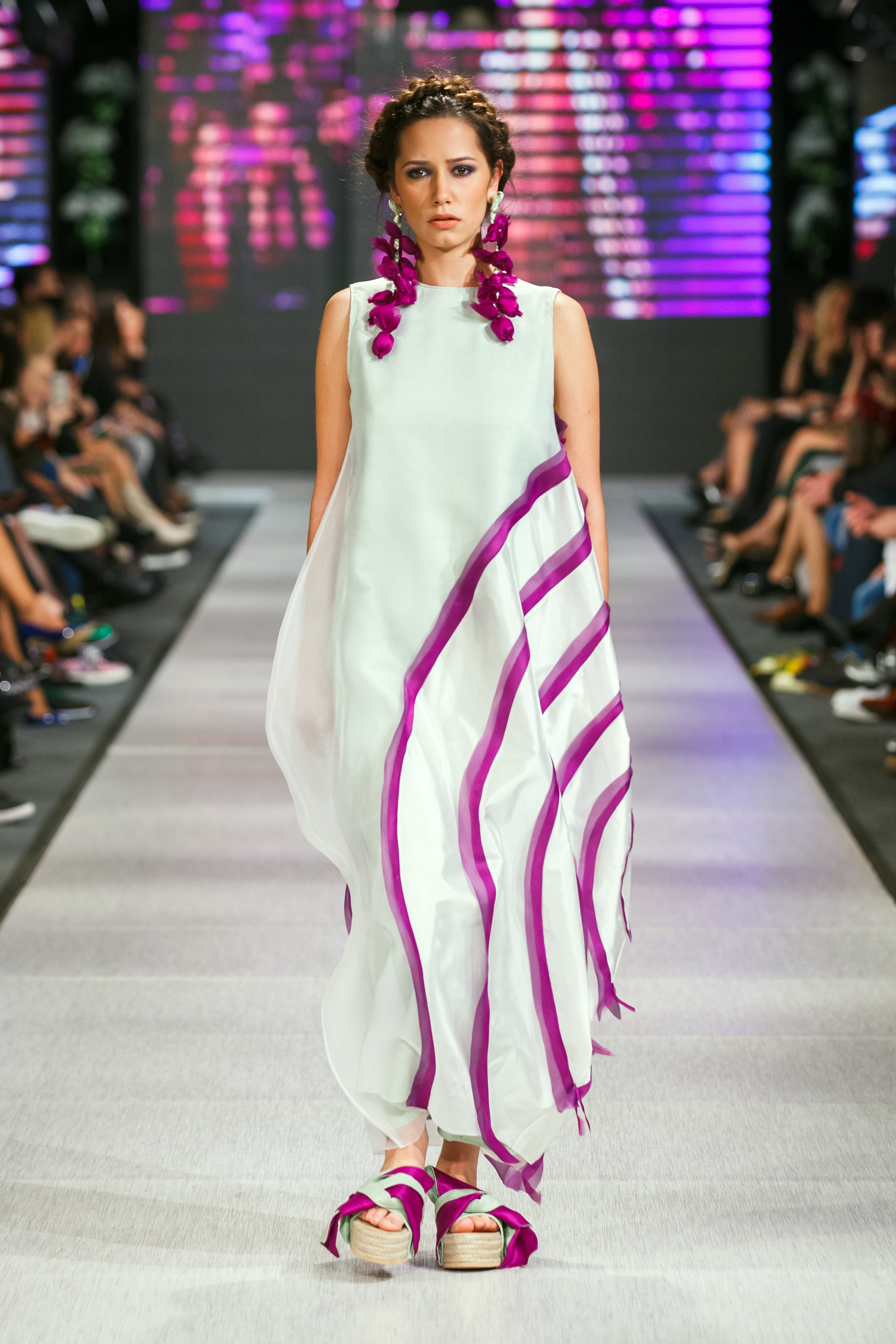
The biggest jewellery trend of the season focused on the ear. After a dalliance with ear cuffs and climbers that headed up (and there were still a few of these to be found), AW17’s earrings are crashing back down in volumes. On the runways, nearly every designer dressed its models in earrings that grazed the jawline or dropped all the way down to the shoulders.

Asymmetry was a key look, with mismatched designs, contrasting colours or solo earrings. Hoops were popular, as were heavily embellished estate-style jewels, and many designers chose to introduce flashes of colour to the ear through brightly hued perspex, long fabric tassels or feathers.

AW17 Trend: High necklines 

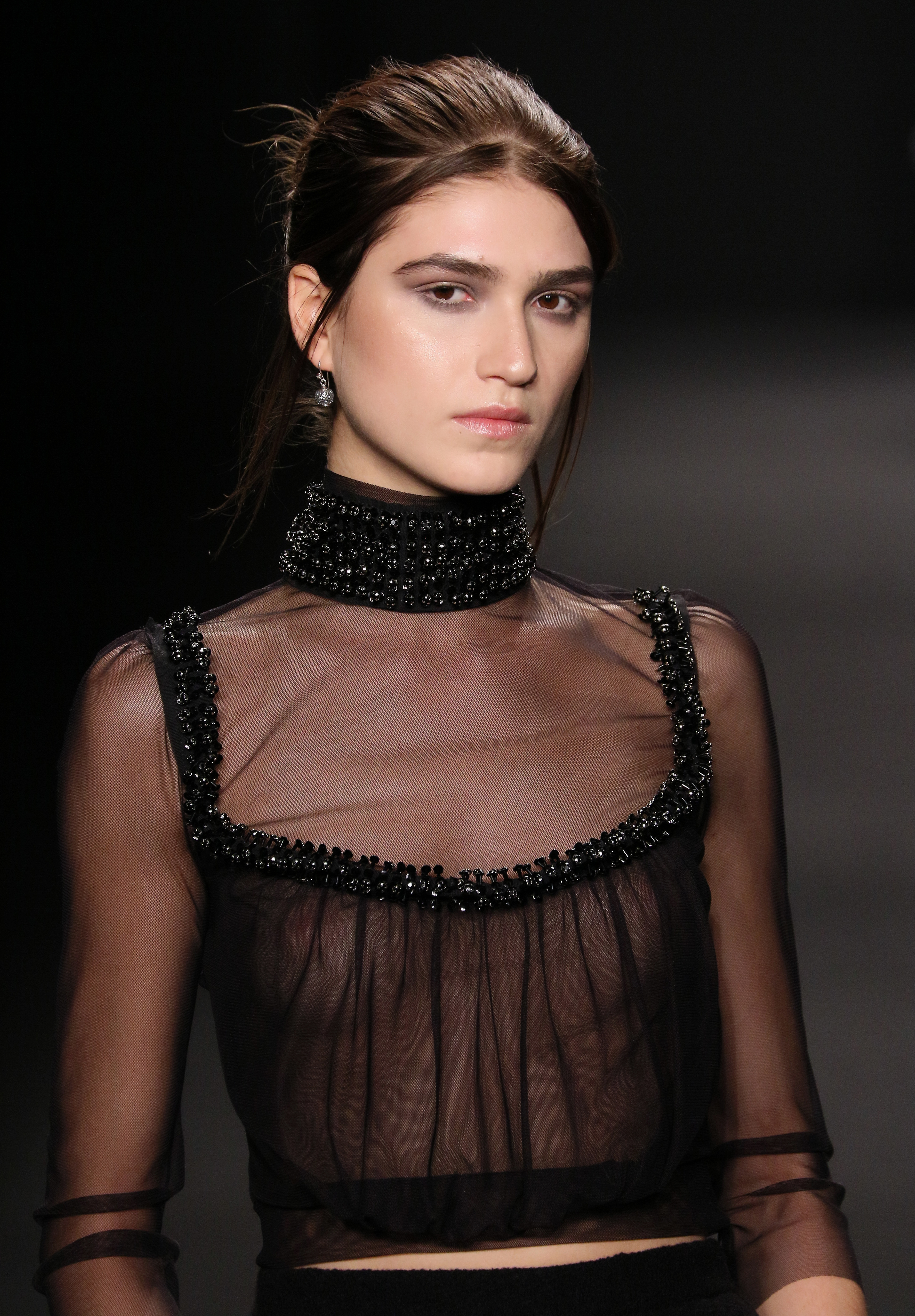
Chokers dominated the AW17 catwalks with most designers dressing the neck in some way – if not with a traditional jewellery choker, necks were wrapped with loops of models’ hair, or bows or scarves tied tight in a knot. 90s-inspired black fabric or leather strips continued to be the most popular look, with some embellished with pendants, crystals or punk-inspired chains.

Related Blog: 5 Of The Best Royalty Free Image Websites

More elaborate diamond-style or pearl chokers could be found, as well as some anchored with large gemstones or created using coloured fabric or wooden beads. Solid metal hoops were used to create tribal-style chokers that sat slightly lower and could be stacked.

AW17 Trend: Playing dress up

After years spent trying to move jewellery away from its twin-set-and-pearls reputation, it would seem that is exactly the theme AW17 collections are chasing. Oversized clip-on stud earrings and short double strands of pearls round the neck hark back to a 1950s style that makes models look as though they have dipped into granny’s jewellery box.

Brooches were pinned to lapels and overcoats, while delicate lariat necklaces dropped down softly to waistlines. Classic collar-length necklaces and drop earrings reined in more elaborate outfits. Cameos were added to chokers and porcelain-style cuffs stacked to evoke a Victorian vibe. This is about playing dress up rather than seeking true elegance.

AW17 Trend: Heavy duty embellishment 

The catwalks were laden with jewels (even on the male models), and the size of those accessories was overpowering. Elaborate bib-style necklaces encrusted with crystals made a comeback, while bejewelled body harnesses stretched gemstones and strings of chains from neck to waistline, and belt to hip. Hair jewellery cropped up in various forms from full metallic hoods and heavy crowns to pearl-studded hairbands and delicate floral clips.

Related blog: How Jewellery Brands Can Get the Most out of Their PR Investment

Face jewels including nose rings and stick-on gems were presented at the more adventurous shows, while enormous earrings and chokers were uniform. Dressed arms were laden with heavy cuffs, often matching, and the occasional upper arm ring. This theme stretched across all styles of show, from futuristic goth-punk to refined ornate eveningwear.

AW17 Trend: Round and rounds

Circles and spheres were a recurring theme in AW17 catwalk jewellery. Hoop earrings – the bigger the better – were one of the biggest trends of the season. Also decorating earrings and necklaces were smooth round spheres, some cabochon like and others mimicking porcelain or created using wound fabric. Silver orbs created a galactic, space-age look.

Related blog: How To Develop A Brand Language ‘Style Guide’

Flat circular shapes dropped from collar necklaces or joined to create earrings, while coin-style metallic rounds created lavish chainmail chokers that spread out over the chest and shoulders. Closed metallic torques, plain chokers and exaggerated circular ear studs also tapped into this trend.

IJL is #withyou providing up-to-date trend advice to inspire your seasonal jewellery collections. Have you entered our Editors’ Choice Awards? Get recognised for your creativity and originality by entering here. 

7 Tips On Boosting Sales With Images On Instagram

Did you know that engagement rates on Instagram are 15x higher than Facebook, and 20x higher than Twitter?

Instagram sees over 60 million photo uploads daily, 1.6 billion likes per day and 73% of brands will post at least one images/video per week.

The success of Instagram is clear, and as a Jewellery business, visually displaying your products is a great way to achieve more sales.

Have you been using Instagram but not seeing the engagement, or sales you expect from the images you share? Keep on reading for my 7 success tips on getting sales with images on Instagram.

  1. Lifestyle Photos

With 90% of the information transferred to our brain being visual, you need to find a way to connect with your customers and one of the most popular types of visuals is lifestyle photos.

Think about your jewellery business, and how you can display your photo’s in a lifestyle-type visual. Brands are seeing a 60% increase in engagement, likes and comments when they use lifestyle photos and this is because it connects with the customer and at the end of the day, connecting and building trust is what drives sales.

  1. Add A Filter

For on-the-go smartphone photo editing, take a look at Snapseed. Before you upload a visual to Instagram, always add a filter using Snapseed. Adding a filter that brightens a photo can increase its “likes” by 24%.

  1. Less Is More

When it comes to creating visuals as a Jewellery business, less is more. Try not to over complicate the visuals you create and share because your audience will keep on scrolling through their Instagram feed. You want to capture their attention in the best possible way so don’t overthink it, and try to create images that would resemble a high budget visual from a global brand. Keep it simple, and show a lot of background space. 

  1. Create A Colour Scheme

For all of the visuals I create across my Social Media platforms have a specific colour scheme. I keep it as simple as possible, and only use 1 or two colours. Take a look at using Canva to create your visuals for Instagram, as it allows you to create your colour scheme so that you can always follow this, without any difficulty.

  1. Use Hashtags

Hashtags are the only way someone can search for a something inside of Instagram. Make sure you do your research using a tool like TagBoard to see whether the hashtags you are using are generating enough traffic. Only use hashtags that are relevant to your jewellery business, and are being searched for. I would suggest using no more than 10 hashtags per post.

  1. Create a Slideshow

Instagram introduced their Slideshow feature last month. Whilst being a very simple addition, it has only increased the platform’s popularity, especially when it comes to businesses marketing online.

This new feature allows you to upload 10 photos/videos in one single post. The photos/videos could be a behind-the-scenes look at your working week, it could be the latest product/service launch or even an event you are attending – the options are endless with the slideshow feature.

Use this new feature, and create a story that connects with your audience. 

  1. Stay Consistent

Consistency is key when it comes to Social Media, and especially Instagram. Because of the newsfeed algorithm, Instagram will show users what THEY want to see, and not what was last uploaded to the platform. To keep your audience interested in your posts, stay consistent and upload on a regular basis.

BONUS: Instagram Stories

Instagram stories allows you to share moments throughout your day whether it be photos or videos for all of your followers to see, and experience for up to 24 hours. You can also add a link, text and tag people inside of your Instagram Story.

If you are looking to advertise on Instagram, take a look at a previous article I wrote for IJL here.

I hope the about 7 tips will help you get more sales using images on Instagram.

So, you have 7 tips to create images on Instagram, but what’s next? How are you going to utilise your images to increase engagement by up to 150%?

I am going to be running a BRAND NEW, and EXCLUSIVE webinar on Social Media, and creating images that drive engagement, traffic and sales.

My NEW, and CERTIFIED webinar on the 13th April at 7pm will help you understand how-to use visual content on your website and through your social networks to increase brand awareness, generate leads and boosts your sales as a jewellery business.

HOW YOU’LL BENEFIT:

  • Successfully integrate your image marketing into your overall marketing strategy.
  • Develop an Image Content Plan using proven templates
  • In 2016, 80.20% of all the Posts published were photos and videos
  • Win new business at ZERO cost by driving organic traffic from Google
  • Why images are so important for your social media activity

This is one of the best visual learning opportunities you’ll have this year – and it’s 100% free and live. If you can’t attend live, you can view the replay online at your convenience – but only if you register and lock in your spot! You will also get access to a FREE image cheat sheet when you log in for the webinar!

‘Pink Star’ Diamond Hits Record Breaking Auction Price

By David Brough

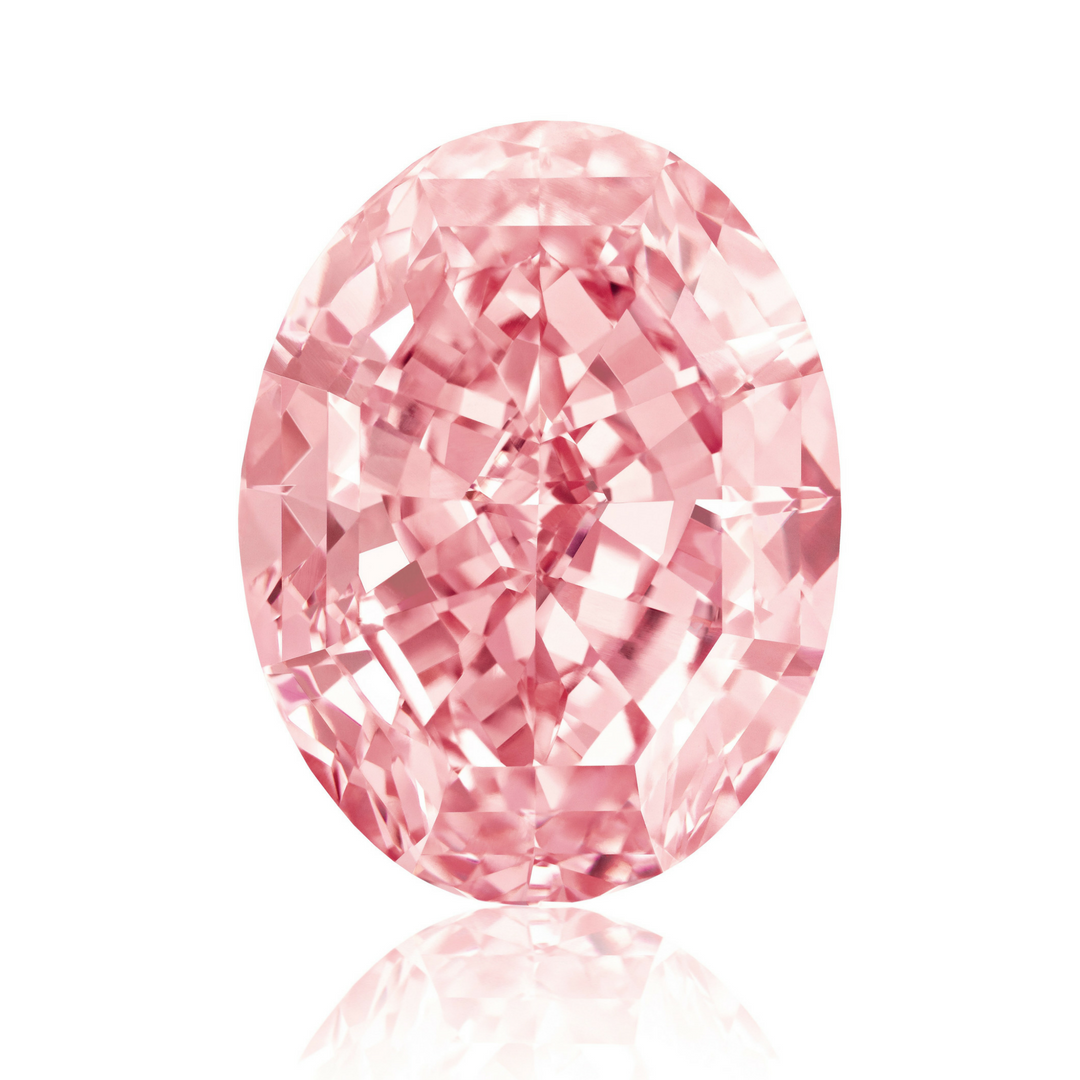
The world record price of U.S.$71 million achieved by the 59.60-carat Pink Star diamond at Sotheby’s auction in Hong Kong, was a bargain for the buyer, Chinese jeweller Chow Tai Fook.

The oval Pink Star smashed the record price for any diamond sold at auction following a brief bidding battle on April 4.

The justification for such a price is rarity and beauty. Fancy vivid pink diamonds of such weight and clarity are extraordinarily rare, leading some commentators before the auction to predict a price in excess of $100 million for the Pink Star, on which Sotheby’s placed a pre-sale estimate in excess of $60 million.

Read more: Why the Synthetic Diamond Market Hinges on Clever Promotion

A deal for The Pink Star fell through at a Sotheby’s auction in Geneva in 2013 after the buyer defaulted on a price of $83 million.

Sotheby’s agreed to share ownership of the piece last year in a partnership with New York-based manufacturers Diacore and Mellen Diamonds. The auction house’s annual report in February 2014 recorded the diamond’s inventory value as $72 million.

So a price tag of $71 million looks like a good value deal for Chow Tai Fook, who will surely now get lots of mileage and branding value by exhibiting the stone, before possibly selling it in a few years’ time to a fabulously wealthy collector, probably from Asia.

No one expects the jeweller to sell it on immediately. Chow Tai Fook has renamed the stone The CTF Pink.

“Buying a stone like this creates a new brand for yourself,” said Tobias Kormind, managing director of online diamond jeweller 77Diamonds.

The previous world record-holder for a diamond sold at auction was the 14.62-carat Oppenheimer Blue, which fetched $57.5 million at a Christie’s auction in Geneva last May.

Read more: What Do Customers Look for in Luxury Brands in 2017?

It was no coincidence that the auction of the Pink Star was held in Hong Kong, rather than in Geneva, New York or London.

Asian buyers have figured prominently in purchases of magnificent rare diamonds in the past few years, such as Hong Kong property tycoon Joseph Lau who bought the Blue Moon for a then world record price of $48 million in 2015.

The Pink Star’s failure this time to reach the price it commanded at the 2013 auction, may be due to a view that the stone was ‘burnt’ by its previous exposure, as some top tier collectors will only buy stones the first time they appear on the market.

Perhaps its colour was not strong enough to maximise its appeal to collectors. However, the extraordinary unique qualities of the Pink Star, now The CTF Pink, are not in any doubt: internally flawless fancy vivid pink diamonds of this size are extremely rare.

Read more: Trump Era Brings Spark Back to Gold Investments

The diamond’s record price also pales in comparison to prices achieved at the top end of the art market in recent years.

Some commentators believe prices achieved for rare diamonds have the potential to close the gap with the art market, but others say the possibility of a future discovery of a significant mine will keep a lid on the top end of the diamond market.

IJL is #withyou sharing market updates and news that’s challenging the global view of the jewellery and watch industries. 

Images courtesy of Sotheby’s

Essential Advice to Improve Your Digital Customer Experience

The power of customer experience is well-known among jewellery retailers.

A glass of champagne during the bridal buying process, or a friendly smile, can make a big difference when a customer is getting ready to hand over their credit card.

But what about your website? Just as customer service matters in-person, it also makes a big difference online. If a customer visits your website and finds it difficult to use, riddled with errors or filled with broken links, how will this reflect on your bricks-and-mortar stores?

Here, we explain what digital customer experience really means and why it is so important.

What is ‘digital customer experience’?

A digital customer experience is anything on your digital channels and social media that a customer comes into contact with, whether they’re just browsing for a gift or looking for support. In 2017, the lines between online and bricks-and-mortar retailing are blurred, which means how your brand performs online could change the way a person feels about your high street boutique.

Read more: What Do Customers Look for in Luxury Brands in 2017?

Digital customers don’t just land on your website looking to shop. Some may be ‘webrooming’ or looking to browse your offer and discover the best prices ahead of a weekend shopping trip. Others may be ‘showrooming’, having visited a high street store to touch and feel products and now jumping online to find the best deal.

Digital experiences are driven by the needs of each individual who visits your website. This is why a personalised approach is such an important thing to consider when designing your digital experience.

Read more: Why the Synthetic Diamond Market Hinges on Clever Promotion

Does your website meet the needs of someone trying to find a last minute gift and a returning, loyal customer? Does it provide inspiration for those who haven’t made up their minds yet? This is why gathering feedback and tracking your users as they move across your site is so important.

What constitutes a great customer experience online?

According to Crispin Boon, head research officer at technology and advisory insight firm, Maru/edr, there are four key facets to a great customer experience online. He explains: “In 2016, we analysed over 1.2 million responses to online retail surveys to uncover what the true drivers of digital experience satisfaction were – we discovered that ease, service, product and fulfilment are the four fundamentals of a fantastic digital customer experience. For example, shoppers will wait no longer than three seconds on average for a site to load – so important to keep up with demands.”

Is it possible to translate in-store customer experience to an online setting?

Although this may seem like a challenge, there are ways to translate all of your hard-earned customer service experience onto your website. While your stores benefit from well-trained staff, does your website encourage customers to fend for themselves? Change this by introducing a live chat tool, which allows your online customers to ask questions and experience the same friendly-approach that you promote in-store.

Another way to showcase your customer service online is through features like customer reviews, star-rating systems, beautiful product imagery and well-written, detailed content. The better these elements are, the more a site visitor can ‘self-serve’, without having to ring you out of frustration or confusion.

How can you measure, monitor and act on customer feedback?

Knowing what your customers are thinking is essential if you want to improve online. There are some great ways to capture feedback online, including site surveys that pop up after a purchase or during the browsing process, or integrated feedback buttons. Each method is worth exploring if you want to work out what makes your customers tick.

Feedback may seem overwhelming, especially if it is spread across operational issues, design, imagery and customer journey mapping. Instead of ignoring feedback, act on it and show your customers that you take their online needs into account, just as you do when you’re stood across from them in store. A good place to start is broken links, poor quality images, social media buttons that fail to loads, and easy access to a telephone number and other contact information.

Read more: How Sponsored Posts and Advertising Works on Instagram

Should every company have a digital customer experience manager?

Not necessarily, but it is important to get your wider team discussing the digital customer experience. Ask your staff to spend an hour in the shoes of a digital customer using your website – is it easy to navigate, are delivery options explained clearly, is a product description accurate? After all, the digital customer experience isn’t just the responsibility of your web developer.

The digital customer experience checklist

Is your website up to speed? Consider these top five places to start if you are ready for a website overhaul…

  1. Quick loading: Does your website take more than three seconds to load? Customers are proven to choose another site if the one they’re trying to access is slow.
  2. Mobile friendly: Does your website automatically format to a mobile and tablet size depending on the device your customer is using?
  3. Easy navigation: You want customers to find what they’re looking for quickly. If your menu bar is complicated, full of criss-crossing options or filled with broken links, you’re unlikely to impress.
  4. Contact details: Does your website clearly show a customer how they can get in touch with you? A phone number, email address and social media channels, clearly displayed, will ensure there’s no frustration.
  5. Quality imagery: Pixelated images are guaranteed to turn your audience off, especially on your homepage. Make the best possible first impression with engaging, interesting images.

IJL is #withyou offering accessible and practical advice from across the worlds of digital, social media, marketing and communications. Speak to our team to find out more. 

Read IJL event director Sam Willoughby’s take on digital customer experience on GemKonnect, here

What Are the Hottest Trends from the AW17 Catwalks?

Rachael Taylor, IJL’s Trend Editor shares an AW17 Catwalk Trend Report 

If there was an overriding theme to the autumn/winter 2017 catwalk shows, it was overzealous adornment. Rich brocades, lavish metallics and abundant embroidery jostled with body chains, quirky cartoon-ish slogans and rich patterns.

Jewellery, often a minimal afterthought on the runway, was found everywhere; and the scale setting at every design house had seemingly been cranked up to: enormous. Shoulder-grazing earrings (mismatched, of course) were de rigueur at just about every show, while necklines were rarely bare – instead, wrapped in velvet chokers, or draped with chains or pearls.

In short, early 2017 delivered a triumphant set of Fashion Weeks for jewellery, smashing any illusions that are heading towards anything but the most maximalist of seasons. Here are five of the bold new jewellery trends from those exuberant AW17 catwalks.

AW17 Trend: Enormous earrings 

The biggest jewellery trend of the season focused on the ear. After a dalliance with ear cuffs and climbers that headed up (and there were still a few of these to be found), AW17’s earrings are crashing back down in volumes. On the runways, nearly every designer dressed its models in earrings that grazed the jawline or dropped all the way down to the shoulders.

Asymmetry was a key look, with mismatched designs, contrasting colours or solo earrings. Hoops were popular, as were heavily embellished estate-style jewels, and many designers chose to introduce flashes of colour to the ear through brightly hued perspex, long fabric tassels or feathers.

AW17 Trend: High necklines 

Chokers dominated the AW17 catwalks with most designers dressing the neck in some way – if not with a traditional jewellery choker, necks were wrapped with loops of models’ hair, or bows or scarves tied tight in a knot. 90s-inspired black fabric or leather strips continued to be the most popular look, with some embellished with pendants, crystals or punk-inspired chains.

Related Blog: 5 Of The Best Royalty Free Image Websites

More elaborate diamond-style or pearl chokers could be found, as well as some anchored with large gemstones or created using coloured fabric or wooden beads. Solid metal hoops were used to create tribal-style chokers that sat slightly lower and could be stacked.

AW17 Trend: Playing dress up

After years spent trying to move jewellery away from its twin-set-and-pearls reputation, it would seem that is exactly the theme AW17 collections are chasing. Oversized clip-on stud earrings and short double strands of pearls round the neck hark back to a 1950s style that makes models look as though they have dipped into granny’s jewellery box.

Brooches were pinned to lapels and overcoats, while delicate lariat necklaces dropped down softly to waistlines. Classic collar-length necklaces and drop earrings reined in more elaborate outfits. Cameos were added to chokers and porcelain-style cuffs stacked to evoke a Victorian vibe. This is about playing dress up rather than seeking true elegance.

AW17 Trend: Heavy duty embellishment 

The catwalks were laden with jewels (even on the male models), and the size of those accessories was overpowering. Elaborate bib-style necklaces encrusted with crystals made a comeback, while bejewelled body harnesses stretched gemstones and strings of chains from neck to waistline, and belt to hip. Hair jewellery cropped up in various forms from full metallic hoods and heavy crowns to pearl-studded hairbands and delicate floral clips.

Related blog: How Jewellery Brands Can Get the Most out of Their PR Investment

Face jewels including nose rings and stick-on gems were presented at the more adventurous shows, while enormous earrings and chokers were uniform. Dressed arms were laden with heavy cuffs, often matching, and the occasional upper arm ring. This theme stretched across all styles of show, from futuristic goth-punk to refined ornate eveningwear.

AW17 Trend: Round and rounds

Circles and spheres were a recurring theme in AW17 catwalk jewellery. Hoop earrings – the bigger the better – were one of the biggest trends of the season. Also decorating earrings and necklaces were smooth round spheres, some cabochon like and others mimicking porcelain or created using wound fabric. Silver orbs created a galactic, space-age look.

Related blog: How To Develop A Brand Language ‘Style Guide’

Flat circular shapes dropped from collar necklaces or joined to create earrings, while coin-style metallic rounds created lavish chainmail chokers that spread out over the chest and shoulders. Closed metallic torques, plain chokers and exaggerated circular ear studs also tapped into this trend.

IJL is #withyou providing up-to-date trend advice to inspire your seasonal jewellery collections. Have you entered our Editors’ Choice Awards? Get recognised for your creativity and originality by entering here. 

7 Tips On Boosting Sales With Images On Instagram

Did you know that engagement rates on Instagram are 15x higher than Facebook, and 20x higher than Twitter?

Instagram sees over 60 million photo uploads daily, 1.6 billion likes per day and 73% of brands will post at least one images/video per week.

The success of Instagram is clear, and as a Jewellery business, visually displaying your products is a great way to achieve more sales.

Have you been using Instagram but not seeing the engagement, or sales you expect from the images you share? Keep on reading for my 7 success tips on getting sales with images on Instagram.

  1. Lifestyle Photos

With 90% of the information transferred to our brain being visual, you need to find a way to connect with your customers and one of the most popular types of visuals is lifestyle photos.

Think about your jewellery business, and how you can display your photo’s in a lifestyle-type visual. Brands are seeing a 60% increase in engagement, likes and comments when they use lifestyle photos and this is because it connects with the customer and at the end of the day, connecting and building trust is what drives sales.

  1. Add A Filter

For on-the-go smartphone photo editing, take a look at Snapseed. Before you upload a visual to Instagram, always add a filter using Snapseed. Adding a filter that brightens a photo can increase its “likes” by 24%.

  1. Less Is More

When it comes to creating visuals as a Jewellery business, less is more. Try not to over complicate the visuals you create and share because your audience will keep on scrolling through their Instagram feed. You want to capture their attention in the best possible way so don’t overthink it, and try to create images that would resemble a high budget visual from a global brand. Keep it simple, and show a lot of background space. 

  1. Create A Colour Scheme

For all of the visuals I create across my Social Media platforms have a specific colour scheme. I keep it as simple as possible, and only use 1 or two colours. Take a look at using Canva to create your visuals for Instagram, as it allows you to create your colour scheme so that you can always follow this, without any difficulty.

  1. Use Hashtags

Hashtags are the only way someone can search for a something inside of Instagram. Make sure you do your research using a tool like TagBoard to see whether the hashtags you are using are generating enough traffic. Only use hashtags that are relevant to your jewellery business, and are being searched for. I would suggest using no more than 10 hashtags per post.

  1. Create a Slideshow

Instagram introduced their Slideshow feature last month. Whilst being a very simple addition, it has only increased the platform’s popularity, especially when it comes to businesses marketing online.

This new feature allows you to upload 10 photos/videos in one single post. The photos/videos could be a behind-the-scenes look at your working week, it could be the latest product/service launch or even an event you are attending – the options are endless with the slideshow feature.

Use this new feature, and create a story that connects with your audience. 

  1. Stay Consistent

Consistency is key when it comes to Social Media, and especially Instagram. Because of the newsfeed algorithm, Instagram will show users what THEY want to see, and not what was last uploaded to the platform. To keep your audience interested in your posts, stay consistent and upload on a regular basis.

BONUS: Instagram Stories

Instagram stories allows you to share moments throughout your day whether it be photos or videos for all of your followers to see, and experience for up to 24 hours. You can also add a link, text and tag people inside of your Instagram Story.

If you are looking to advertise on Instagram, take a look at a previous article I wrote for IJL here.

I hope the about 7 tips will help you get more sales using images on Instagram.

So, you have 7 tips to create images on Instagram, but what’s next? How are you going to utilise your images to increase engagement by up to 150%?

I am going to be running a BRAND NEW, and EXCLUSIVE webinar on Social Media, and creating images that drive engagement, traffic and sales.

My NEW, and CERTIFIED webinar on the 13th April at 7pm will help you understand how-to use visual content on your website and through your social networks to increase brand awareness, generate leads and boosts your sales as a jewellery business.

HOW YOU’LL BENEFIT:

  • Successfully integrate your image marketing into your overall marketing strategy.
  • Develop an Image Content Plan using proven templates
  • In 2016, 80.20% of all the Posts published were photos and videos
  • Win new business at ZERO cost by driving organic traffic from Google
  • Why images are so important for your social media activity

This is one of the best visual learning opportunities you’ll have this year – and it’s 100% free and live. If you can’t attend live, you can view the replay online at your convenience – but only if you register and lock in your spot! You will also get access to a FREE image cheat sheet when you log in for the webinar!

‘Pink Star’ Diamond Hits Record Breaking Auction Price

By David Brough

The world record price of U.S.$71 million achieved by the 59.60-carat Pink Star diamond at Sotheby’s auction in Hong Kong, was a bargain for the buyer, Chinese jeweller Chow Tai Fook.

The oval Pink Star smashed the record price for any diamond sold at auction following a brief bidding battle on April 4.

The justification for such a price is rarity and beauty. Fancy vivid pink diamonds of such weight and clarity are extraordinarily rare, leading some commentators before the auction to predict a price in excess of $100 million for the Pink Star, on which Sotheby’s placed a pre-sale estimate in excess of $60 million.

Read more: Why the Synthetic Diamond Market Hinges on Clever Promotion

A deal for The Pink Star fell through at a Sotheby’s auction in Geneva in 2013 after the buyer defaulted on a price of $83 million.

Sotheby’s agreed to share ownership of the piece last year in a partnership with New York-based manufacturers Diacore and Mellen Diamonds. The auction house’s annual report in February 2014 recorded the diamond’s inventory value as $72 million.

So a price tag of $71 million looks like a good value deal for Chow Tai Fook, who will surely now get lots of mileage and branding value by exhibiting the stone, before possibly selling it in a few years’ time to a fabulously wealthy collector, probably from Asia.

No one expects the jeweller to sell it on immediately. Chow Tai Fook has renamed the stone The CTF Pink.

“Buying a stone like this creates a new brand for yourself,” said Tobias Kormind, managing director of online diamond jeweller 77Diamonds.

The previous world record-holder for a diamond sold at auction was the 14.62-carat Oppenheimer Blue, which fetched $57.5 million at a Christie’s auction in Geneva last May.

Read more: What Do Customers Look for in Luxury Brands in 2017?

It was no coincidence that the auction of the Pink Star was held in Hong Kong, rather than in Geneva, New York or London.

Asian buyers have figured prominently in purchases of magnificent rare diamonds in the past few years, such as Hong Kong property tycoon Joseph Lau who bought the Blue Moon for a then world record price of $48 million in 2015.

The Pink Star’s failure this time to reach the price it commanded at the 2013 auction, may be due to a view that the stone was ‘burnt’ by its previous exposure, as some top tier collectors will only buy stones the first time they appear on the market.

Perhaps its colour was not strong enough to maximise its appeal to collectors. However, the extraordinary unique qualities of the Pink Star, now The CTF Pink, are not in any doubt: internally flawless fancy vivid pink diamonds of this size are extremely rare.

Read more: Trump Era Brings Spark Back to Gold Investments

The diamond’s record price also pales in comparison to prices achieved at the top end of the art market in recent years.

Some commentators believe prices achieved for rare diamonds have the potential to close the gap with the art market, but others say the possibility of a future discovery of a significant mine will keep a lid on the top end of the diamond market.

IJL is #withyou sharing market updates and news that’s challenging the global view of the jewellery and watch industries. 

Images courtesy of Sotheby’s